Restoring sight to the blind with chips
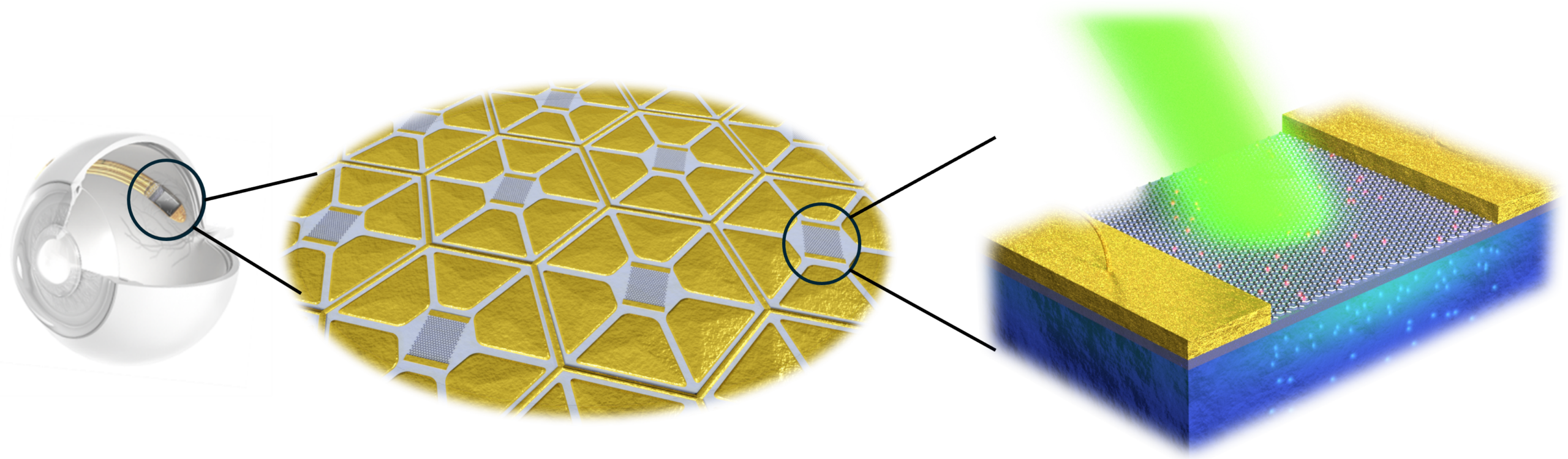
Millions of people lose their vision due to retinal diseases. The Institute for Electromagnetic Fields is developing tiny light sensors made of graphene that could replace damaged photoreceptor cells in the future. We’ll show you how we’re using nanotechnology to open up new possibilities for those affected.
Millions of people lose their vision due to conditions such as retinitis pigmentosa or age-related macular degeneration, which damage the light-sensitive cells of the retina. In advanced stages, the use of optoelectronic methods—which convert light into electronic signals in place of the natural cells—is the only way to restore vision.
The Institute for Electromagnetic Fields (IEF) at ETH Zurich has made it its mission to apply its world-leading expertise at the intersection of light and electronics here. It is developing new light sensors based on graphene, a material consisting of a single layer of atoms. The goal is to create eye implants that will restore sight to blind people. A project like this requires state-of-the-art laboratories. It is only through our in-house manufacturing in highly specialized cleanrooms that we are able to control light at the tiniest nanoscale and ensure that the sensors can adapt to the changing lighting conditions of everyday life.
Today, we’re giving you a glimpse into our work. Stop by and discover the exciting world of nanofabrication with us!
Promotional video by the Department of Information Technology and Electrical Engineering on the eRetina project (Video: ETH Zurich).